CSE’s response to the Local Power Plan

The joint publication by the Department of Energy Security & Net Zero and Great British Energy of the Local Power Plan marks a turning point for the community energy sector. With a commitment to invest £1bn, and ambition to support over 1,000 new local and community generation projects, the Plan represents a scaling of ambition that the sector has long been waiting for.
It’s far more than just money and growth; this plan finally represents national recognition of the importance of communities across the UK having a voice and stake in our energy system – something CSE has championed for decades as essential for helping to build public buy-in for net zero.
Prioritising under-served communities
We welcome many aspects of the Local Power Plan and it’s heartening to see such a strong focus on providing grants and loans for projects in under-served areas and communities new to the sector. We know that historically, community owned renewable energy projects have been more likely to be developed in affluent communities, and more needs to be done to improve equity and diversity of the benefits. This is something CSE has researched and actively tried to address through our local energy support programmes.
To deliver the Plan’s vision that “every community in the UK will have the opportunity to benefit from, and own, a local energy project by 2030”, prioritisation of resource is essential for filling gaps, reaching disadvantaged areas, and ensuring that those who haven’t yet been able to bring forward a project finally have the opportunity to do so.
Investing in capacity, not just projects
We’re encouraged by the commitment to invest in capacity building, not just projects, and to develop a team of experts to help communities to plan and build their local projects. This is something CSE has consistently called for. Grants, loans and bankable models alone aren’t enough – particularly in new or under-served areas. It’s exactly why we created Community Energy Go (with Community Energy England and Ashden) to demonstrate how practical support and capacity-building can catalyse new community energy schemes.
Supporting shared ownership and community benefit
It’s positive to see plans to support a range of shared ownership options alongside viable replicable business models and more options for community schemes to sell their power. Not all communities will have the capacity or opportunity to develop and own a project outright. It’s good that the government plans to take forward work to mandate shared ownership – but this process needs speeding up. Right now, communities are reliant on commercial schemes following best practice and choosing to do this. And communities need support to engage effectively with commercial developers, to take up joint ownership offers and ensure that the community benefit funds that are set up locally are fair and deliver real impact for local people.
Working with local authorities
We welcome the agreements already in place with ten combined or strategic authorities and the ambition to develop more – since we need to fill in the gaps for those communities that fall outside these areas. We know local authorities have a critical role in supporting local community energy networks to develop and scale. But not all of them currently have the knowhow, expertise or resource to do this effectively.
CSE has repeatedly played a convening role between local authorities and communities, helping to develop local networks or supporting the formation of new community energy groups. We’ve published guidelines (with CAG consulting and the South East Net Zero Hub) to help local authorities put the right building blocks in place to do this well. It will be important for GB Energy to go further than signing agreements, to ensure local authorities are delivering effectively and following best practice.
The call to arms for everyone – including Ofgem, NESO and network operators – to play their part in making this plan a reality is critical. Current industry rules and codes remain largely indifferent to the huge social and added value that community energy delivers. This has to change so that local and community-led schemes are supported, prioritised and recognised as central to delivering Clean Power 2030 – for example through Strategic Special Energy Planning, Regional Energy Strategic Planning, and the connections reform process.
Recognising the role communities can play in demand flexibility
We’re pleased to see recognition of the role local and community energy projects can play in facilitating consumer or community led flexibility, referenced as smart local energy systems. Whether delivered through battery storage, other community assets or collective action, community energy can help unlock access to flexibility markers for otherwise excluded groups. This is exactly the approach we are trialling with housing associations, local authorities and UK Power Networks through our SNUG project.
Delivery will be key
As with most government strategies or plans, the proof of the Local Power Plan will come through the detailed delivery processes, structures and partnerships set up to make it happen. CSE stands ready to work with government and GB Energy to do all we can to make it a success.
If delivered well, it will contribute towards cutting energy bills, delivering more local green jobs, improving our energy security and retaining income for local community benefit. But much more, it has the potential to change the underlying model of ownership in our energy infrastructure, which in turn will affect public attitudes and buy-in for the energy system transition.
-
News

CSE responds to Fuel Poverty Strategy review
We’re calling for bolder targets and a fairness principle in the fight against fuel poverty.
Policy -
News
CSE responds to the Regional Energy Strategic Planning consultation
Regional Energy Strategic Planning could play a vital role in the energy transition, but there are some key considerations missing.
Policy Planning -
News
CSE responds to the Warm Homes Plan
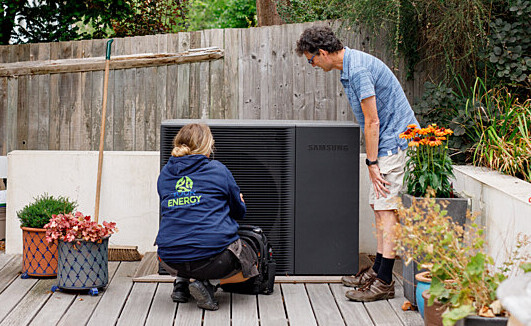
We’re celebrating the wins in the Warm Homes Plan, while highlighting how the government could go further.
Policy -

Community Energy GO
Community Energy Go connects community groups with free expert advice and hands-on support to make their community energy projects happen.