Understanding your gas or electricity bill
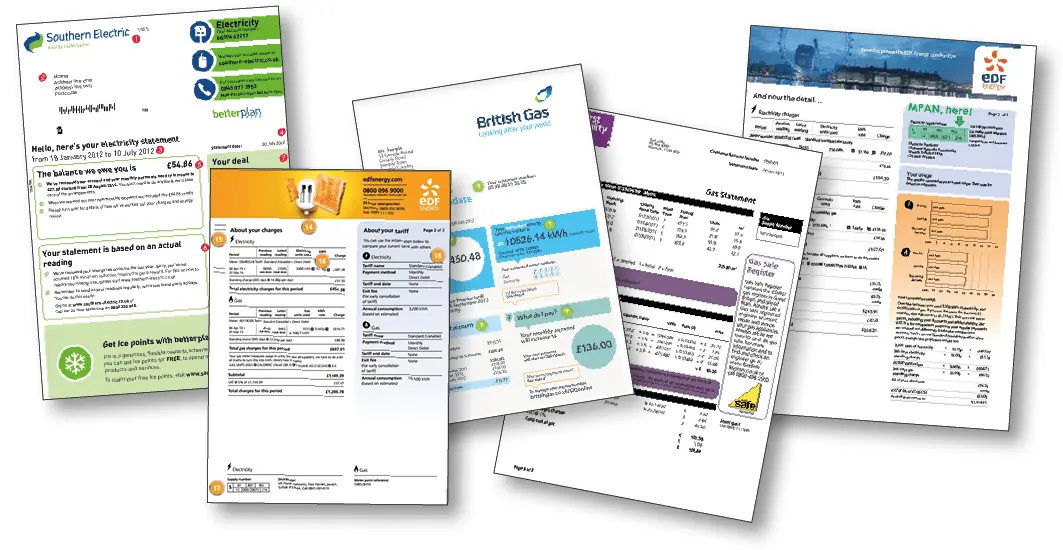
To understand your gas or electricity bill, there are three things you should check for:
- That you’re being billed for the right amount.
- That you’re not building up any debt.
- If there’s a cheaper tariff you can move to. Check carefully before making any decisions.
How you pay for your energy
The type of document you receive from your energy supplier depends on how you pay. This will be either a bill asking for payment, or a statement, showing what you have already paid. There is no standard bill layout, so documents may look different between suppliers, and some companies provide bills online.
Prepayment meters
Prepayment meters require payment before energy is used, similar to a pay-as-you-go system. Energy costs are usually higher during colder months and lower in warmer months, so planning ahead is important. Some people prefer this way of paying as you can keep a careful eye on what you use and set budgets.
Prepayment customers can top up in a shop or on their phones if they have a smart meter, whenever they choose.
Credit meters
Credit meters allow you to pay for energy after it has been used, either through regular direct debit payments or by paying bills as they arrive. Bills are usually sent quarterly or monthly and show how much you owe, how charges were calculated, and when payment is due. Payments can be made in full, by instalments, or by direct debit.
Direct debit amounts are typically calculated using past energy use and spread evenly over 12 months. This means you may pay more than you use in summer and less than you use in winter. Credit meters often offer more tariff choices, but it can be easier to fall into debt or pay more than necessary. To ensure accurate billing, meter readings should be provided regularly.
If you have previously overpaid or underpaid, your supplier may adjust your direct debit to correct this, meaning it may not always reflect your current usage. If your statement shows a large credit or debit, it is a good idea to submit a meter reading and ask your supplier to review your payments as soon as possible. You can also request a refund for any excess credit.
Smart meters
Smart meters work with both prepayment and credit accounts and include an in-home display that shows real-time energy usage, daily costs, and remaining credit for prepayment customers. Using the display is optional, and with a smart meter you may no longer need to submit meter readings.
A breakdown of a typical energy bill
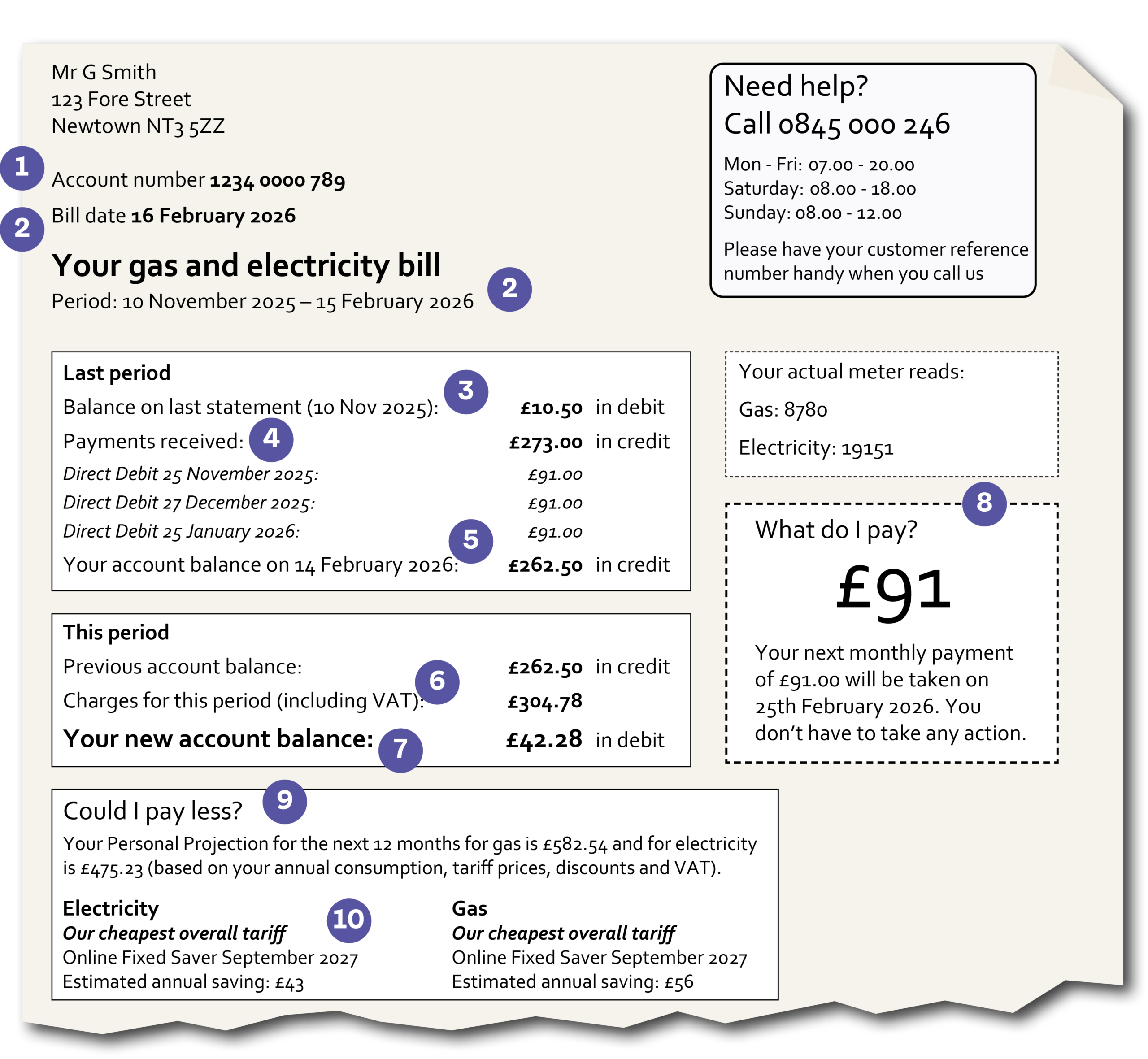
1 Account or customer number. This is unique to you, and you’ll need it when you contact your supplier.
2 Bill date and bill period. The bill date is when the bill or statement was sent out. The bill period is the date range that the bill or statement relates to.
3 Balance on last statement. This shows the balance carried over from the last bill or statement you received. It should match the account balance on the last bill or statement you received.
4 Payments received. This records the payments you’ve made since the last bill or statement. If it’s a bill, your payment(s) to pay off the last bill should be recorded here. If it’s a statement, you should see all your monthly direct debits or your top ups. Contact your supplier if any of these payments are.
5 Previous account balance. This is the outstanding balance from the last bill or statement less any payments made since. On a bill this figure will be £0.00 if you have paid off your previous bill. On a direct debit statement this figure should be a considerable credit of all of payments received.
6 Charges for this period (including VAT). This records the total costs incurred of all the gas and/or electricity used within this billing period. To see more about how this is calculated see sections 13-15 below.
7 Your new account balance. This is what you owe, or are owed, in total. It’s a combination of the charges for this period plus the balance from the previous period, taking account of all of payments received.
8 What do I pay? This is how much you pay currently if you are paying by direct debit, or how much you owe if it’s a bill. It may be more or less than your average monthly usage to account for previous over or under payment.
9 Estimate for the next 12 months. This is a prediction of how much your gas and/or electricity will cost over the next year.
10 Cheaper tariffs. Your bill or statement must show whether there is a cheaper tariff you could switch to with your current supplier. Their customer service team can usually also advise if there is a better tariff for you. Your supplier normally only displays cheaper tariffs they offer, but another supplier might be much cheaper.
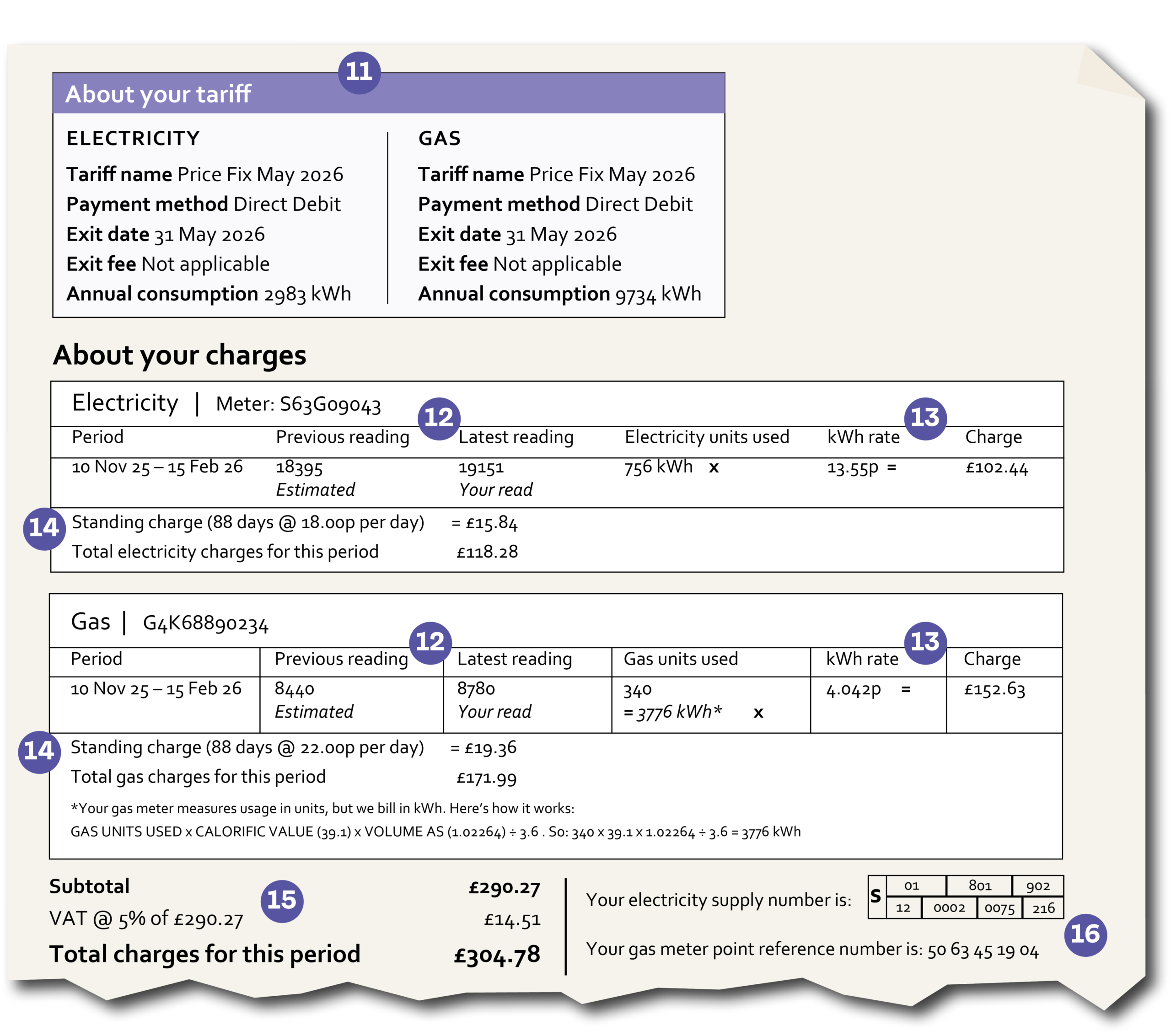
11 About your tariff. The ‘about your tariff’ box contains all the information needed to compare your tariff against the market, including:
- The name of your tariff.
- How you pay for fuel.
- The date your defined-length tariff ends (if you have one).
- Any exit fees you may have to pay. These can apply on any defined length tariff and you pay them if you switch to a different tariff more than four weeks before the tariff end date (above).
- Usage over last 12 months. This is your estimated annual usage, calculated from all the meter readings received. This is the best figure to use when comparing tariffs.
12 Meter readings. If you have an estimated read, your bill or statement will generally say ‘estimated’ or ‘e’ next to the reading. If it says ‘c’ or ‘a’ then it’s a ‘customer supplied’ or ‘actual’ reading. You should provide an accurate reading every month if possible, especially if you’ve recently moved in or changed supplier.
13 Unit rate. This is the price you pay per unit of gas or electricity. Units are measured in kilowatt hours (kWh) on your bill. Electricity unit rates are either single unit rate or a dual rate, which provides two meter readings and is usually called Economy 7. If you are on Economy 7 and use less than a third of your electricity at night, you’d probably be better off on a single-rate tariff. Gas meters measure in units of 100s of cubic feet (hcf) or cubic meters (m3), but gas is sold in kilowatt hours (kWh). The conversion calculation is displayed on your bill. The example bill above shows a calculation for a metric meter. You can convert from hcf to m3 by multiplying by 2.83.
14 Standing charge. This is the charge you pay per day, regardless of how much gas and/or electricity you use. Some suppliers reduce it if you pay by direct debit.
15 VAT. The VAT charged on electricity and gas for domestic use is 5%. If the VAT rate on your bill is higher than this, then you are being charged a commercial rate and should contact your supplier immediately.
16 Meter Point Reference Number (MPRN) and Meter Point Administration Number (MPAN). These are your unique supply numbers, MPRN or ‘S number’ for electricity and ‘MPAN’ for gas. By law they must appear on your bill but are not usually printed on your meter. When you switch supplier, it helps to provide these numbers.
If you’re struggling to pay your bills …
If your bills are becoming unaffordable, contact your energy supplier as soon as possible. We’ve got advice on what to do here. Your supplier can set up a manageable payment plan to help you. Don’t just ignore your energy suppliers request for payments.
If you’re juggling several different debts, speak to a specialist debt advice service before agreeing any further payment plans.
Paperless billing
Some suppliers offer a discount to customers who manage their bills online and stop receiving paper bills in the post. Online accounts provide greater awareness of your gas or electricity usage and balance and allow you to see your bills, provide meter readings and sometimes even switch tariff.
But for many people this change means they’re less likely to look at their bills than if it arrived through the post, which may end up causing problems.
-
Advice
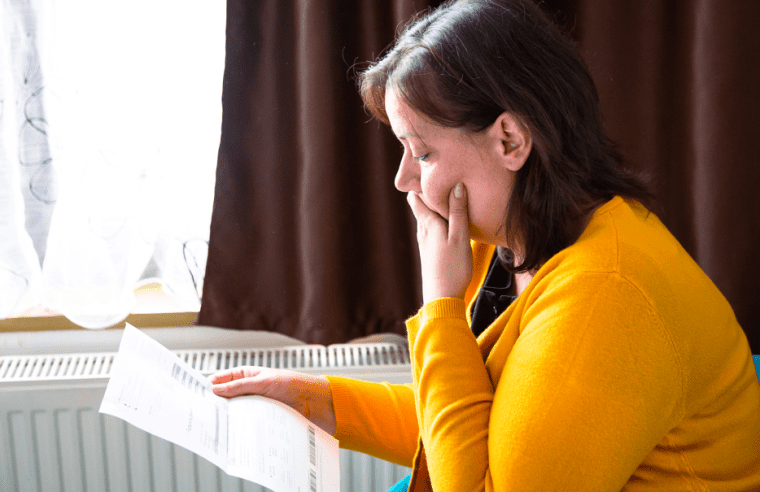
Can’t pay your energy bill?
If you can’t pay your energy bills, should you stop paying altogether? Read our advice.
Managing your bills -
Advice
Upgrading and replacing your boiler
If your boiler is more than 10 years old, replacing it with a new high-efficiency model will save you energy and money.
Keeping your home warm -
Advice
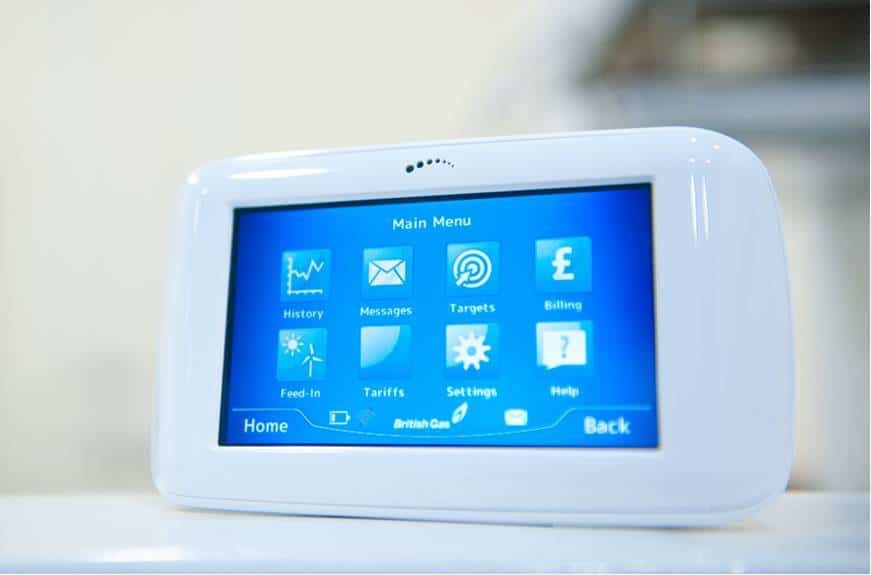
Smart meters
Smart meters give you more information about your gas or electricity use and help you save energy.
Your energy supply Smart energy -
Advice
Reading your gas or electricity meter
What do all those dials mean? It’s useful to know how to read your meter, and this page tells you how.
Your energy supply Managing your bills