Healthy Homes checklists
Welcome to the Healthy Homes checklist for home visiting frontline workers in Wiltshire. It includes two tools:
1) Short checklist
This is meant for quick on-the-spot assessments. It helps identify urgent problems like serious damp, heating failures, or safety hazards, prompting clear next steps such as immediate referral or follow-up. It’s designed to be fast and practical, so workers can use it efficiently during home visits.
2) Long checklist
This walks workers through a more thorough review. It covers damp and mould indicators, ventilation and air quality, risks from cold or excess heat, and general wellbeing or safety signs. It encourages careful observation, so referral decisions can be well supported and target the right improvements.
Additional information
Lorem ipsum dolor sit amet, consectetur adipiscing elit. Maecenas volutpat nibh sed vehicula scelerisque. Donec pharetra odio sed arcu rhoncus, at ultricies nibh vestibulum. Sed et arcu diam. Integer blandit vitae augue ut vehicula.
1) Damp and mould check
Damp is the presence of unwanted moisture within a building, its materials, or internal environment. Damp may result from moisture entering the building, moisture being generated within the building, or moisture not drying out as expected.
Examples include:
- Damp patches.
- Discolouration or staining.
- Peeling finishes.
- Musty odours.
- Material deterioration.
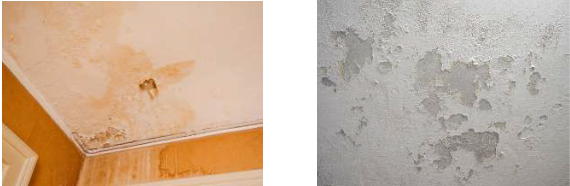
Look especially in corners, behind furniture and in areas that are often colder.
Mould is a type of fungus that can grow on surfaces where sufficient moisture is present for a prolonged period. Mould may appear in a variety of colours, including black, green, white or brown. It can develop on building materials, furnishings, and personal belongings.
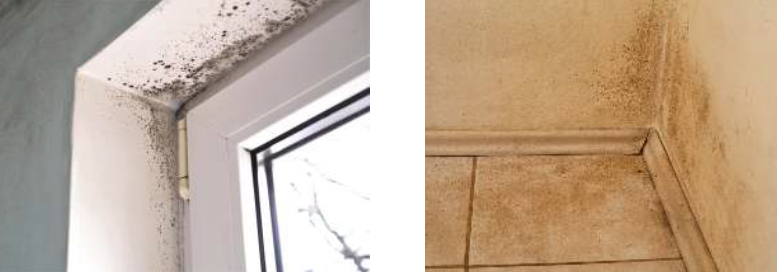
Condensation occurs when moisture in the air meets a surface that is at or below the temperature at which water vapour changes into liquid water. The resulting moisture may be visible as water droplets or may occur on surfaces without being immediately apparent.
Where condensation occurs regularly and surfaces remain damp for extended periods, conditions may arise that support mould growth.
Damp and mould problems can be caused by several different things. Sometimes it is simple to spot, for example where a leaking gutter causes a damp pact on the wall. But it can also be caused by insufficient heating or ventilation.
If you see any signs of damp, mould, or if you notice a musty smell, then this may be something worth noting.
It may also be helpful to ask the resident(s) if they are aware of any existing issues.
2) Ventilation and air quality check
Ventilation is the process of supplying fresh air to a building and removing moisture, indoor air pollutants, odours, and carbon dioxide concentrations.
Homes can be ventilated in different ways, sometimes ‘uncontrollably’ through drafty windows and chimneys with open fires, and sometimes in a more controlled way using extractor fans in kitchens and bathrooms, and trickle vents in windows in bedrooms and living spaces.
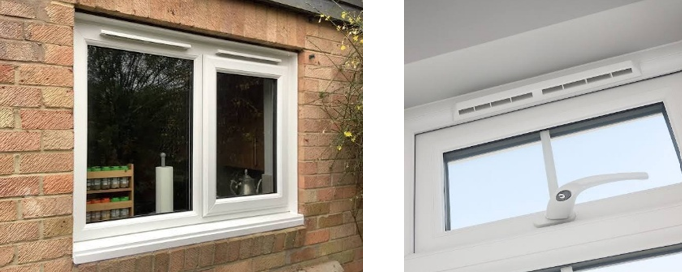
Different homes and different people may take different approaches and it can be difficult to assess this thoroughly, for example, just because extractor fans are there doesn’t necessarily mean people use them. So try to gauge the resident’s level of understanding of the need for ventilation and ask questions about opening windows or using extractor fans.
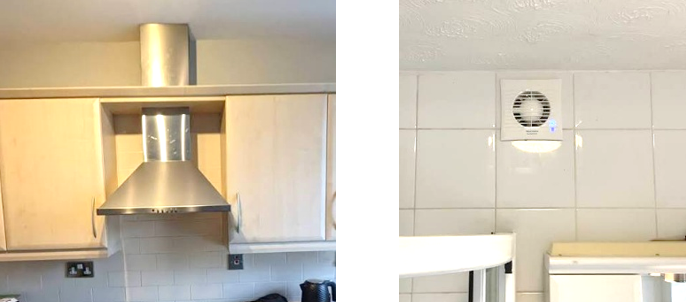
If there are any obvious signs of poor ventilation such as stuffy air, musty smells, missing or broken extractor fans, or damp or mould, please make a note.
The UK Centre for Moisture in Buildings has produced a very good video which aims to provide guidance to homeowners on how to avoid moisture problems in existing homes. It introduces moisture in buildings, explaining in simple terms and images what damp means, where moisture in buildings comes from, as well as introduce the notion of balance and how this can be achieved. Click here to watch the video.
Ideally all trickle vents should be open and unobstructed, and all extractor fans should be free of any dust and debris and in good working order. Ideally all extractor fans should work automatically, for example, when the bathroom light is on or when humidity levels get too high.
3) Cold home check
There can be several reasons as to why a home is cold, some are more obvious such as a broken heating system or high energy bills leading people to ration heating. Other factors can include defects and disrepair (such as ill-fitting windows or doors, or gaps around a suspended floor, or between floorboards), and less obvious things such as levels of insulation.
Keep a look out for any obvious signs (it’s cold), and ask some basics questions around the heating system: does it work, does someone know how to use it, does it get used?
Things to look out for:
- Windows. Check condition of windows. Is there any draught proofing?
- Chimney. Is there an open fireplace? How often does this get used?
- Doors. Check for letterbox covers, draught snakes, curtains over external doors.
- Floorboards. Check on carpeting, rugs on cold floors.
- How is the home is heated? Does it seem to be working? The use of plug-in heaters could be a sign that the heating is broken, or that the resident only wants to heat the one room.
4) Excess heat check
Excess heat can be an issue for lots of people, particularly in hotter weather but it’s not uncommon in winter where people may not have sufficient control over their heating systems and can also suffer from excess heat.
Asking questions around comfort both in winter and in summer may give valuable insights and help to flag any issues. Different residents may be affected differently, and not all will have the same agency to make changes. Basic guidance on how to keep homes cool can be found here.
Homes can overheat in different ways:
- Through direct sunlight, particularly in rooms that face south and have large windows.
- From sources of heat inside the house, such as the oven and other appliances.
- By rising heat, particularly for top-floor flats and loft rooms.
- By shutting off forms of ventilation, for example closing windows at night due to concerns about noise and security.
Good cross ventilation at the right times of days is one of the best ways to keep a house cool, along with preventing the heat from entering the house in the first place.
5) Safety and wellbeing concerns
There may be obvious safety and wellbeing concerns, or more vocal tenants will raise issues themselves. But sometimes these will be less obvious, and people may be less forthcoming.
Gentle questions around general wellbeing may be helpful, so might keeping an eye out for other tell-tale signs such as piles of unopened bills, unnatural amounts of clothing worn to keep warm. There is space on the checklists for you to make any other notes that may be relevant.
If in doubt, make a referral to Warm & Safe Wiltshire.