Park homes
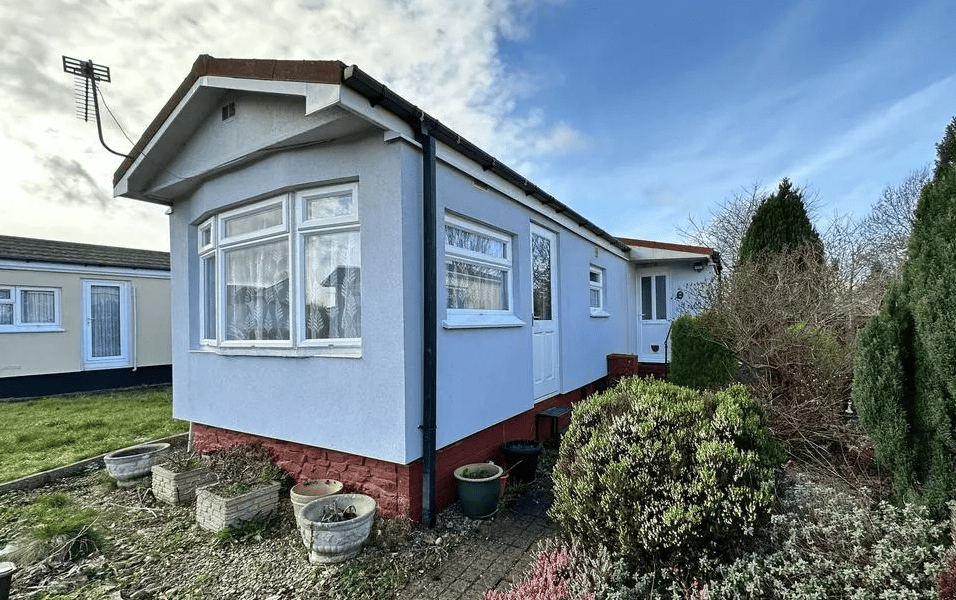
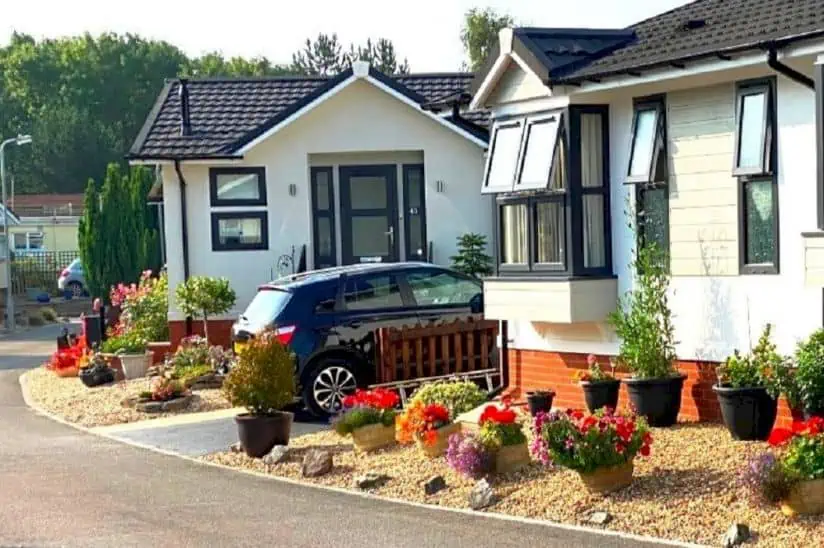
Many park homes are vulnerable to temperature fluctuations, damp, and noise due to the way they have been built. They can be poorly insulated and difficult to heat in winter and keep cool in summer.
To improve the energy efficiency of your park home, there are lots of things you could consider. Click on each one to jump to the relevant section on this page.
Draught-proofing | External wall insulation | Insulating wallpaper | Underfloor insulation | Park home skirting | Roof and loft insulation | Windows and doors | Ventilation, damp and mould | Heating options | Renewable energy | Choosing an installer | Grants
Draught-proofing
Draught-proofing could be the first thing to consider because it’s relatively cheap and can make a good difference to your comfort and reduce heat loss. There are several popular options:
Doors and windows
These can be made more airtight using letterbox draught excluders and key hole covers. Rubber or foam strips can be inserted along the inside door and window frames, and sealant can be used on the outside of the frames. Consider using thermal curtains for the windows and doors.
Floors
Cut out the cold air entering the home through gaps between the floorboards and around the skirting boards with sealant, self adhesive strips, foam strips and wooden trim. Adding carpet or extra rugs are great options too.
For more information, see our advice on DIY draught-proofing.
External wall insulation
Often, park homes are made from thin plywood without much insulation, so they lose a lot of heat through the walls, and can also get hot in summer. Adding better insulation to the outside of the home will help.
Before any work is started, ensure your chosen installer has done a thorough investigation of the condition of the original walls. Replace damaged timbers and fix any leaks before work starts.
A variety of insulation products are available, but expanded polystyrene (EPS) boards are among the most common.
When installing the insulation, the first step for most systems will be to remove external fixings: things like lights, aerials and guttering. The new insulation layer will add 2 to 4 inches to the width of your walls. This means in some cases the roofline will need extending to ensure it covers the new insulation.
The insulation boards are supported by a rail which is fixed to the bottom of the wall. They’re joined together and reinforced at corners to make sure they’re protected against weather and damage.
Render is then applied to the insulation board and a glass fibre mesh is set into the surface to strengthen it. An additional layer of render is added, followed by a durable top coat, which can be painted.
Whatever insulation system you choose, ensure the installer fits a consistent layer of insulation around the entire home. Gaps and breaks in the insulation layer can cause condensation issues internally and reduce the performance of the insulation.
Insulating wallpaper
Insulating wallpaper products such as Sempatap are occasionally used to internally insulate park home walls and ceilings. This is often a cheaper method, but the reductions in heat loss are less than with traditional wall and roof insulation methods. Installation should be carried out by a professional to ensure there are no gaps in the insulation layer where condensation could occur.
Underfloor insulation
Park homes with suspended timber floors are susceptible to high levels of heat loss and cold draughts through gaps in the flooring and skirting boards, so insulating underneath the home will make a difference.
Before insulating the floor, ensure the skirting, chassis and jacks are in good condition. If the chassis and jacks are heavily corroded, it is advisable to restore these prior to insulating.
Underfloor insulation is relatively easy to install because of the ease of access. One common method for insulating the floor is to fix sheets of quilted multifoil insulation to the underside of the floor joists. Spray foam insulation can also be used but this is difficult to remove from the floor joists, wires and pipework, so it can present a problem when maintenance work is needed in this area in the future.
Park home skirting
Skirtings made of brick, wood or plastic cladding run along the entire length of the home between the floor and the ground. These conceal the chassis, jacks, cables and pipes underneath the home and protect the underside from the elements, so it’s important that these are in good condition. After insulating the walls and floors, the skirtings can also be insulated, if needed.
Roof and loft insulation
Not all park homes have easy access to the loft, so insulating the roof can be complicated. It’s definitely not a DIY job. An ideal time to install insulation is when the roof is being replaced or repaired.
Any contractor insulating the roof should check the condition of the joists and rafters before starting. They should ensure adequate ventilation is installed to reduce the risk of condensation in the loft space: for example, vents in the ridge, soffits or gable ends. Sections of the roof will likely need to be removed to lay mineral wool batts between and over the joists. There are less disruptive methods of insulating the roof, such as spraying in cellulose or foam insulation, but this method carries a higher risk because it is harder to ensure adequate ventilation for the loft space.
Windows and doors
Because of the way park homes are constructed, there are often issues with poor quality glazing and blown panels. Replacing all windows with double glazing can be expensive, so it might be more cost effective to repair rather than replace the windows. An alternative for single glazed windows is secondary glazing. This comes in multiple forms, from permanent hinged panels to sliding panels on a track, and removable perspex panels. You can also use a thin film that is taped to the window frame and shrink-wrapped to create a seal.
If you’re having external wall insulation fitted, consider at the same time replacing windows and doors which are old or in poor condition. Once the external wall insulation is done, it’ll be harder to replace windows and doors without damaging the insulation in the process.
Ventilation, damp and mould
If you have any work done to your park home to improve the insulation, install new windows or cut down on draughts, it’s absolutely vital that you also upgrade the ventilation. This might mean installing new extractor fans and background ventilation.
Damp and mould are common in park homes, and ventilation is key to reducing condensation and moisture build up. It’s also important to check that any work completed on the home does not block ventilation and whether additional vents and extractor fans might be required.
To reduce the risk of damp and mould, follow this advice:
- Turn the heating on regularly. It doesn’t have to be on all day, every day, but often enough for the home to be warm.
- Install extractor fans in the kitchen and bathroom. Check existing extractor fans are clean and are working correctly. Make sure they turn on automatically or are turned on every time steam is being produced.
- If you don’t have an extractor fan and can’t install one, make sure you open the kitchen and bathroom windows during or after creating steam.
- Install trickle vents on the windows if they are not already built in, and make sure that these trickle vents are kept open.
- Don’t block or cover up vents and air-bricks. If a vent has a cover, move it to the open position.
- Never dry laundry inside. Every time you do this, a bucket full of water evaporates into the home.
- Treat the visible mould and an area at least 1m wider than the mould patch with a mould spray. Allow to dry, then repeat.
Heating options
Many park homes have no mains gas so residents are likely to use oil or LPG boilers to heat their homes. These work in a similar way to mains gas boilers and will need to be installed by a regulated heating engineer.
Some park homes have log burners that might have a back boiler to run hot water to radiators. These will need to be installed by a HETAS registered installer and permission from the site owner might be needed.
Buying logs or oil for park homes can be difficult to budget for as it needs to be bought in bulk, supplies can be difficult to find, and prices can vary. It might be cheaper to buy heating oil in summer, and it’s worth looking online for price-comparison websites. Local heating oil suppliers may have price match options and there are local buying clubs that offer discounts. Read more about buying heating oil here.
As we move away from fossil fuels to heat our homes with electricity instead, the options for park homes can be slightly different to other types of properties. Some park homes already have electric heating – usually either an electric boiler that heats water in radiators (like a gas, oil or LPG boiler) or panel heaters. Both of these options can be expensive. Better options include electric storage heaters, which use cheaper night-time electricity, and heat pumps.
Electric storage heaters
Electric storage heaters are only an option for park homes with their own electricity supply, as otherwise you can’t take advantage of the cheaper periods of electricity because the park owner will be choosing and managing the electricity supply. Find out more about electric storage heaters.
Heat pumps
Heat pumps are not currently very common in park homes. This is because they work best in homes which are insulated, and many park homes aren’t insulated at all. However, a heat pump could be great option if the home is insulated. This could be an air-to-water heat pump, which heats water in radiators. Alternatively, an air-to-air heat pump is also ideal for park homes as they provide both heating in winter and cooling in summer. This helps with overheating, which can be a problem in some park homes. Air-to-air heat pumps don’t have radiators but blow air around your home. You can read more about heat pumps here.
Meters
Some park homes have a direct energy supply from the electricity or gas network. These will have their own meter and are billed for their energy usage from an energy supplier.
Other homes are sub-metered. This is where there is one main meter for the entire park and one bill is sent to the park owner. Each home on the park has a smaller sub-meter that measures how much each home has used and how much of the total they need to pay. Residents on sub-meters can’t chose their energy supplier or tariff, or their payment method.
Park Home Warm Home Discount
Park home residents that don’t have their own electricity meter might be eligible for the Park Home Warm Home Discount payment. It needs to be applied for each year and applications usually open in September. For details, see charisgrants.com/partners/park-homes.
Park home residents who pay a supplier directly for their electricity might be eligible for the regular Warm Home Discount, which is applied automatically as a discount on your bill.
Renewable energy
It might be possible to put solar PV panels on the roof of your park home, but only if the roof is strong enough. Your installer will need to check. Homes will need to have a direct connection to the electricity network and their own meter. Permission might need to be gained from the site owner.
Choosing an installer
If you live in a park home and are planning to make improvements, it’s very important to choose the right installer. We strongly recommend you consider only Trustmark approved contractors who are also members of an insulation accreditation body, such as the Installation Assurance Authority. This will mean they’ll use approved installation methods and the work will meet the accreditation standards set by the United Kingdom Accreditation Service. It is also important to check that the company offers guarantees.
Grants
Check if a grant is available to help improve your home and make it more energy efficient and cheaper to heat. Some grants are provided by central government and others from your local council. A local energy advice organisation should have information about what grants are available.
The types of grants, the amount of money available, what it can be used for and the eligibility criteria change all the time. Even if you’ve applied before and were rejected, it’s worth trying again as things may have changed.